Episode Transcript
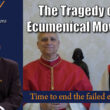
[00:00:01] The meeting between Pope Leo and the female Archbishop of Canterbury puts in stark contrast what's been true for decades. The ecumenical movement is a failed project that's frankly become a farce. Hello, I'm Eric Sammons and welcome to Crisis.
[00:00:33] So, this week we saw the Pope meet with the Archbishop of Canterbury. Now, that in itself isn't very much news. Popes and archbishops of Canterbury have been. Anglican archbishops of Canterbury, to be clear, have been meeting for decades. Now, what made this one a little bit different, though, however, was the fact that the current Anglican Archbishop of Canberry is a woman. Sarah Mullale, I think her name is. I'm sure she's a lovely woman, but obviously this is just a joke for Catholics at least to think, to pretend as if a woman could be an actual archbishop, a Christian archbishop. Yet Pope Leo went through the motions, did what popes do these days, and met with her. Not only met with her, but then she had a number of activities there. Prayer, prayer services, blessings, things of different natures that she did there. And, you know, the optics. I mean, just. I have the picture up on the screen. For those who are watching. If you're not listening, you can. You can. Those who are just listening, you can find it on X or anywhere online.
[00:01:42] It just kind of shows what a farce this has become, that the ecumenical movement, it has no energy whatsoever, and it's just a matter of performative going through these motions. That's really, frankly, meaningless at this point.
[00:01:57] And so it shows the ridiculousness, the uselessness of the ecumenical movement. And the optics, frankly, are ridiculous from a Catholic perspective. Now, I will give credit. I want to give a little bit of credit here. Pope Leo, first of all, I don't actually think.
[00:02:13] This obviously isn't a Pope Leo problem. He just happened to be the Pope with. When we get a female Anglican Archbishop of Canterbury, by the way, when I say the word archbishop, just pretend I'm putting it in quotes every time. Obviously, she's not an actual archbishop, but, you know, we're just going to say the title here because that's the title she gives herself and that her fake church gives her as well.
[00:02:35] And so the Pope, though, anyway, so this isn't like a Pope Leo issue, because Pope Francis would have met with her, I'm willing to bet Pope Benedict and Pope John Paul II and even Pope Paul VI probably would have met with her as well, just simply because that's the reality of the ecumenical movement. When you've bought into the underlying presuppositions of the ecumenical movement, which every modern pope has, including my favorite Pope Benedict.
[00:03:00] Pope Benedict was a little pushed back a little bit more than the other popes on it. Then you have to do things like this.
[00:03:07] And what I want to talk about later in this episode is why we really, as Catholics need to resist those false presuppositions of the ecumenical movement. And. And frankly, the Catholic Church needs to just get out of it, needs to abandon it and recognize what a failed project it is.
[00:03:23] But the Pope. I want to give Pope Leo a little bit of credit here, though, because it was clear from his statements that he recognized that the idea of a corporate reunion between Canterbury and Rome is kind of ridiculous. He said, while much progress has been made on some historically divisive issues, new problems have arisen in recent decades, like having female bishops and priests rendering the pathway to full communion more difficult to discern.
[00:03:53] I know that the Anglican Communion is also facing many of these same questions at this time.
[00:03:59] Nevertheless, we must not allow these continuing challenges to prevent us from using every possible opportunity to proclaim Christ to the world together.
[00:04:08] It would be a scandal if we did not continue to work towards overcoming our differences, no matter how intractable they may appear.
[00:04:14] Now, I know a lot of people don't speak Vaticanese. They don't speak this kind of diplomatic language that church officials use, but that is, by modern papal terms, that's almost a smackdown of the Anglicans, because when he says, you know, I know the Anglican Communion is also facing many of these same questions at this time, that's as close as you're going to get to a pope or even a bishop these days.
[00:04:41] Basically almost insulting the Anglican, saying they got problems in their own house they got to deal with. And he's like, you know, new problems have arisen, rendering the pathway to full communion more difficult to discern. That's also stating, I don't see any way we're going to be able to reunite with these people, because look, look how crazy they've gotten. Now, I'm not. Again, this isn't a podcast where I'm going to talk about how great Pope Leo is or anything like that, because ultimately, he did meet with her and I. He buys in 100 to the false presuppositions ecumenical movement, just like his predecessors have. And just like almost every Catholic bishop does, most Catholic priests and a lot of the Catholic laity as well. And that's where the real problem lies. It doesn't lie with a particular pope. It lies with the fact that the Catholic Church has embraced this Ecumenical movement, which really they never should have in the first place. Okay, so next what I want to. Well, actually what I want to do is let me quote Edward Petton who had a quote about this. He said by publicly treating Sarah Mullale. That's the name of the archbishop. Archbishop. As a valid archbishop, allowing her to lead prayers with the Pope, bless a real archbishop in the Clementine Chapel and officiate Vatican. I'm sorry. And officiate Anglican Vespers in a historic Roman church.
[00:06:00] The Vatican is serving to affirm her in her ecclesial trans. Identity and error. I mean, I love that. That is a great way of putting it. Just like as Catholics we should not act like a man who says he's a woman, should not call him a. Her or act like he is actually a woman. Because all that does is endorse and embrace the, the, the mental problems that person has, the delusions that person has. Likewise, a woman pretending to be a. A Christian archbishop is still. I'm not saying I don't think the Anglican Archbishop of Canterbury has mental problems like a trans person might, but I will say that anybody who acts like she is actually an archbishop and treats her like one, they are affirming the, the, the error and, and the lie of which she is living and which her whole communion is, is endorsing. And so I think those are very. Those are great words. Vatican is serving to affirm her in her ecclesial trans. Identity in air. That's exactly what this is. It's a. It's like. It's like the transgender error in many ways. And I also thought what Taylor Marshall posted something on X which I thought was great.
[00:07:14] He used to be an Anglican priest. For those who don't know, Taylor was from number of years, not for super long because he fortunately he got smart quick enough. But he was an Anglican priest and he writes, when I was an Anglican priest, I would meet Catholic priests who called me Father and said things like I'm praying for your priestly ministry.
[00:07:32] This reinforced for me that I was approved by Catholic clergy and was therefore valid.
[00:07:39] It did terrible damage to my soul and it was very uncharitable of them. Although they didn't intend it, they confirmed me in my heir.
[00:07:47] That is why I am against fake ecumenism. It set me back.
[00:07:51] The first Catholic priest who ever challenged me saying I wasn't a priest and I should become a Catholic was Monsignor James Connally, who told me so in a friendly but firm way in a cafe in rome and by St. Anne's Gate in 2006. He's now Bishop Connally of Lincoln, Nebraska, by the way. I know Bishop Connally as well. Great bishop. He was very. He was the chaplain of a pro life group. I was involved in the 1990s.
[00:08:15] Great and holy bishop. Obviously he's acting like a great and holy priest at that point. My opinion is that Pope Leo, a cradle Catholic, does not fully understand how he is reinforcing Anglican errors by assuming kindness and encouraging their sacerdotal acts. The Anglicans interpret as full approval and 99% full communion.
[00:08:34] Sometimes Protestants need just be told, let's be one. Let's just need to be told, let's be one. True unity is in truth and communion. Protestantism is lacking in wrong. It's time to become fully Catholic. Well said, Taylor. That's exactly right. That is the problem with doing this. It's. It's not. I know some people will defend this, some Catholics will defend this as. This is. This is like diplomatic. This is what it's like when a diplomat meets with a leader who's evil of another country. It's not like you're endorsing everything you say. And there is something to be said for having common courtesy.
[00:09:04] And actually, I'm going to have on the podcast an episode about having courtesy with a guest who wrote a book about it.
[00:09:12] But common courtesy does not mean you lie.
[00:09:16] And when you let this woman conduct spiritual exercises, so, you know, blessings and prayers and vespers in your house, that's what you're doing, is you're affirming the lie that she's actually a artist archbishop when she's not.
[00:09:36] And what it does is it harms people's souls. And that's why it's so dangerous. I mean, Taylor gets right to the heart of the matter. This isn't a matter of just like, oh, we don't like those icky Anglicans or something like that, or we need to play nice and it's just a way of the world, things like that. What we need to think about first and foremost is the salvation of souls. And this harms. This harms souls when you do things like this.
[00:09:58] And so that's. Now, this is, as people know who have followed me for a little while, this is something near and dear to my heart. I wrote a book called Deadly Indifference.
[00:10:09] How the Church Lost Her Mission, How We Can Reclaim It. This was published a few years ago, and it's all about religious indifferentism that creeped into the Catholic Church primarily through the ecumenical movement, and how What a danger this is for so many, for so many people, for so many souls.
[00:10:31] And so I want to take a little bit of a history lesson here very quick and then kind of talk about the. Where the foundational principles of ecumenism and why it is a. Catholics need to reject those foundational principles and therefore reject the ecumenical movement.
[00:10:46] So the ecumenical movement started in Protestantism. Catholics did not start it. They didn't want anything to do with it. In fact, initially, popes ordered that Catholics could not be involved in the ecumenical movement. It started as a Protestant phenomenon.
[00:10:59] It was starting in the 19th century, but really started kind of formally in the early 20th century. And the idea was, think about, try to pretend you're a Protestant. From one, if you're a Protestant watching this, you don't have to pretend, but I would encourage you to become Catholic, but pretend you're a Protestant. You believe in Jesus Christ, you love him, and you believe certain things about him. But then you see all your brothers and sisters in, you know, let's say you're Methodist, in your Baptist churches and your Episcopal churches and your Presbyterian churches, they all believe very different things than you do. And there's a lot of infighting. And you know, our Lord called for us to be one. And you see that's not happening at all within Protestantism. People are breaking off and forming their own churches every day, it seems like.
[00:11:45] And so you're thinking, hey, we need to stop this. We need to stop the infining, figure out what it is we believe and unite around our core principles. That's essentially what the ecumenical movement was. It was Protestants realizing their house was a mess and they needed to clean it up. That's the ecumenical movement in a nutshell. And what they decided was, is that the idea of let's focus on a few things where we agree and then we'll kind of ignore the places we don't agree because we'll decide those are non essential.
[00:12:18] We'll call things where we agree essential and things where we don't agree nonsense. So the resurrection of Jesus Christ, that's essential. Of course, some Protestant, liberal Protestants rejecting that, you know, the Trinity, that's essential.
[00:12:30] But even what baptism does, that's non essential.
[00:12:34] Things like that are non essential. We will unite around what's essential and we'll define what's essential by what we unite on.
[00:12:41] And we'll just kind of act like the things that are not essential aren't, aren't very important. So it's essentially people agreeing where they agree and ignoring where they disagree.
[00:12:52] That's essentially what the Protestant ecumenical movement was. One thing to note about the Protestant ecumenical movement, though, is think about it, what do Protestants lack?
[00:13:03] I mean, they lack a number of things, but primarily when in this context, they lack communion, eucharistic Communion, they literally don't have it. I know they have things they call communion, but from a Catholic perspective, now we're putting our Catholic hat back on. We're no longer pretending to be a Protestant.
[00:13:19] And when you look at that as a Catholic, you think, well, unity comes only through Jesus Christ, and it comes in the Blessed Sacrament. In Holy Communion, we literally call it Holy Communion.
[00:13:30] We don't strive as Catholics for unity. We strive for communion. That's what we're going for.
[00:13:38] And so for us, the thing that unites us isn't the fact that we agree on things or that we have the same checklist of things that we think are important.
[00:13:47] No, it's that we are united in Jesus Christ, in Holy Communion. Well, since Protestants have massive disagreements about what communion is, they couldn't include that as one of their essentials that they all agreed upon. So it really has nothing to do with unity in Protestant, in the Protestant echemical movement, the Eucharist, Holy Communion has nothing to do with Protestant, with unity. And this of course, is a huge problem for Catholics from a Catholic perspective, because literally that's how we unite is through Holy Communion. If you don't have unity in Holy Communion, you don't have unity.
[00:14:25] It's not an intellectual exercise, in other words. Yes, there's an intellectual exercises that are done that kind of help bring people to the Church, things like that. But the Communion itself isn't okay, we all happen to score the same on this test that we took.
[00:14:40] It's that we all receive together the body, blood, soul and divinity of our Lord Jesus Christ together.
[00:14:46] So why did Catholics get involved in the first place? If this is all true, and it is, I, I document a lot of it here in my book Deadly Indifference.
[00:14:54] If this is true, well, why. And by the way, you can buy that ericsams.com, yes, I will shill for my book. And if you don't like, if you call me a grifter, that's okay. If you call me a grifter in the comments, we'll try to put it up at the end and display it on the screen. But the point is, and that only difference, I detail some of this, but. So why did Catholics get involved? I think there's a number of reasons, but I think Ultimately, because Catholics started getting involved, dipping their toe in. In really the 50s, 40s, 40s, a little bit in the 1950s, and whole hog in the 60s. And I think a lot of it, honestly, is because of. It has to do with the aftermath of World War II and the Holocaust.
[00:15:33] Now, I've already talked about, and other people talked about how the relationship between Catholics and Jews, which is not ecumenism, by the way, that's interreligious dialogue, because that's. They're not the same religion as us.
[00:15:45] So it's not. Ecumenism is only between Christians.
[00:15:49] But there's this idea of we see how divided the world is and what that can cause. It can literally cause millions of people to die in the most horrific war in human history.
[00:16:00] And so a lot of Catholic leaders were like, we need to do things that promote peace. If you look at a lot of the basis of, like, especially interreligious dialogue, which is a separate entity, but it has some of the same basic fundamental premises behind it, is a lot of times it's a call for peace. That's what the Assisi meeting was in 1986. The JP2 call, it was for peace.
[00:16:21] And the idea, though, is we need some type of unity in the world, even if we disagree on things, so we don't have another horrific war again. And so a lot of Catholics decided, okay, we need to join into the ecumenical movement because it's a matter of. Instead of fighting each other, we need to sit down and talk.
[00:16:41] We need to have dialogue. And this is what is the. The kind of. The key idea of the ecumenical movement is that that unity comes through talking to each other, through dialogue. Now, of course, before 1964, dialogue was never, ever a priority in the Catholic Church. Why do I say 1964? I mentioned. I've mentioned on this podcast before I detail my book, but it's. It's a. It's a papal document called Ecclesium suam by Paul VI, written in 1964. It's not a document of Vatican II. He wrote it while Vatican II was going on. But essentially, he argues that dialogue has always been the way that your church does her mission and executes her mission. That dialogue is like the main way means by which we somehow follow Jesus Christ and do evangelization, things like that. Now, of course, this is completely turning on its head. Everything the church has always understood about her mission, her mission has always been proclamation of the gospel. Now, I will say Paul VI and others have tried to square that circle of bringing dialogue and Proclamation together. In fact, there's a Vatican document, I think, from the 80s, maybe the 90s. I think it's called Proclamation and Dialogue or something like that, where they try to square that circle and act like they're compatible with each other.
[00:18:02] Okay, on some level they are.
[00:18:05] When you proclaim the gospel, you might be sitting down with somebody to have a chat with them. And your first word isn't necessarily, although this was the first words of Jesus and John the Baptist, repent and believe the gospel. It might be, what do you believe?
[00:18:17] And that is actually good evangelization, by the way.
[00:18:20] You get to know somebody, you have dialogue with them, to understand them. But then it always is leading to proclamation.
[00:18:27] And that's where the ecumenical movement falls short, is it does dialogue for the purpose of dialogue.
[00:18:32] It doesn't do it in order to convert somebody that hopefully that they will convert one day, but instead, just to say we have this kind of fake unity.
[00:18:40] The problem, of course, is it keeps all the false presuppositions of the Protestant ecumenical movement that Catholics got involved in.
[00:18:49] And that is we basically kind of move aside the idea of communion, but instead unity. Now, I know if you look at Catholic documents that talk about the. The ecumical movement, talk about ecumenism, they talk about full communion. In fact, I think Pope Leo, he mentioned full communion.
[00:19:06] That's a problem too, this whole idea of full communion. What is partial communion? This has always been a problem. Like, is somebody partially pregnant?
[00:19:14] You're the in communion, you're out of communion. Now, I understand that, for example, a Protestant who's invalidly baptized is a member of the Catholic Church, a visible member of the Catholic Church.
[00:19:25] But I would just say they're out of communion with it if they embrace the heresies that they do. And, you know, they're not receiving communion, things like that. So it's a very difficult thing.
[00:19:35] Yeah. So. But the point is, is that if you look though, at the history, and I've read these, all these documents, terms like full communion were used a lot in the early days. And then later, if you look at the way the Vatican, but even Catholic bishops and priests talk, they go away from that language and they just talk about unity and dialogue. They just talk about unity and dialogue. And so what happens is it leads to some of the craziest stuff. So, I mean, okay, there's two major problems with the in practice of Catholics being involved in the ecumenical movement. One is it does lead to Catholics actually embracing error and heresy. We just saw, I think it was last week, the bishop, the Catholic bishop of Fresno, Joseph Brennan, I believe his name is, he was at the consecration of an Anglican bishop first. Why, why was he there? Why would a Catholic bishop go to an invalid consecration that makes a mockery of the sacraments? We know as Catholics that Anglican orders are not valid. And so going to an Anglican consecration as a Catholic bishop makes no sense.
[00:20:42] It's not something that should be done.
[00:20:44] And yet he went. But not only did he go, but during the actual consecration, when the other Anglican bishops were putting their hands over the new bishop, new Anglican bishops, and saying the prayers to consecrate him as a bishop, you see the Catholic bishop puts his hands out, he's kind of standing off a little bit, but not really kind of even walks a little closer. He puts his hands up to. And he is seen saying the prayers, the prayer that consecrates this Anglican bishop.
[00:21:12] Now I mean, just to be clear, in a right ordered church, that bishop should be immediately dismissed from office, probably should be excommunicated if he doesn't repent of what he does. He definitely should be excommunicated if he doesn't repent of what he does. He should basically called into the Vatican, said, what were you thinking? You need to make a public statement that this was wrong and you repent of doing it. It was a sin, you shouldn't have done it, and you are relieved from your duties whether you repent or not. If you don't repent, you are communicated. I mean, that's what they should have done. Of course nothing will happen, I'm sure to him.
[00:21:49] But this is where the ecumenical movement leads. It leads to farces. Like a female archbishop acting like a bishop archbishop at the Vatican with the Pope, a Catholic bishop, actually co consecrating an Anglican bishop. I mean, the whole thing is just ludicrous. It's a farce. And so that's one thing. Now I will say that I'm not saying that everybody involved in the echemical movement embraces heresy and errors on the Catholic side. I'm not claiming that, but it does lead to that.
[00:22:18] And really the, what it has done, and this is the, the main kind of thesis of my book, is it's really a shift of emphasis that leads to these errors. So what has happened is in, in previous generations, from the Protestant Reformation until about the 20th century, when Catholics talked about Protestants, they knew that Protestants believe certain things that we did as well. They knew Protestants believed in the Holy Trinity. They knew that Protestants believe Jesus Christ resurrected from the dead. They knew that Protestants were not 100% in error. Nobody's 100% in error. The Muslims aren't even 100% in error.
[00:22:58] And they knew. And the Buddhists aren't even 100% in error now. They're more in error the further away they are from Catholicism. But the point is, Protestants, they do have a lot of things they believe that are true.
[00:23:10] But Catholics have always known that the emphasis of Catholics, and this was done in charity and love for their souls, was on their errors. What did they get wrong? And this just makes sense. It's like if you, if you have a brother who's an alcoholic, yes, you are going to affirm, like, things that you love about him, things that are good about him. But you don't just ignore the alcoholism and act like it doesn't exist. But that's essentially what's happening in the ecumenical movement. I've been to ecumenical meetings before where this happens. And typically, here's what happens in ecumenical meeting between Catholics and any other group. I was. I was particularly at ones that were with Catholics and Orthodox, but you'll see them in all of them.
[00:23:56] What happens is the Catholics talk about how great the Protestants are.
[00:24:02] The other side is the other side talk about how great they are. And then the Catholics will often insult Catholics. You know what Catholics believe, They'll kind of make snide remarks about their own belief system. They'll apologize for what they believe.
[00:24:13] I remember I was at a meeting between of Catholics and Orthodox and a Catholic priest there. This was in the late, like 2008 or 7, something like that. I can't remember the exact year, May 2009. And the Catholic priest started basically insulting Pope Benedict for summerum pontificam and for embracing, you know, allowing the Latin Mass to be practiced more at an ecumenical meeting.
[00:24:38] First of all, the idea is just stupid because he's insulting the Pope for wanting to embrace traditional liturgy in front of Orthodox Christians who. They embrace traditional liturgy. So it was silly, first of all, it was very unecumatical. But it's very common that Catholics will feel very apologetic because they have this attitude that, you know, Catholics have been triumphalistic for so long, we have to go the opposite direction. We have to be apologetic all the time. So at these meetings, like, Protestants don't apologize for what they believe. Orthodox don't apologize for what they believe. But Catholics apologize for what they believe.
[00:25:15] This is what happens at these ecumenical gatherings too often.
[00:25:20] And so this is what, this is that shift of priorities, though, where instead of focusing on what Protestants get wrong. We just focus on what they're right about. What does that do?
[00:25:31] How does that help to say, oh, yeah, great, I'm so glad you believe in the Trinity, and then ignore everything else about what they believe, the things that they believe that are there, that are dangerous to their soul.
[00:25:43] It just. It doesn't make much sense.
[00:25:46] You know, one I want to analogy I would have is it's like a family that's deeply dysfunctional.
[00:25:54] Let's say the father is a real problem. The father is the problem. He's abusive, he's lazy, or whatever the case may be.
[00:26:03] And what happens is the whole family says nothing about it ever. They only talk about how great the great things about their dad, and they ignore it. And the family gets more and more dysfunctional, gets more and more unhealthy. It gets worse and worse because they refuse to say what's wrong. They will only say, oh, this is where we agree. This is where we like dad. They will never confront him and say, you need to change your life. And so the family just gets worse and worse. And so this is what's happened. The Catholic Church has never been willing to stand up since the ecumenical movement started and say, you know, Protestants, you're wrong on this. You need to repent of these false beliefs. You need to come home to the Catholic Church.
[00:26:42] And so what happens is the Protestants believe they don't need to change.
[00:26:46] In fact, they think the Catholics believe what they. The Catholics think what they believe is fine, because that's the message we're getting. And so we're not striving anymore for unity. We're just striving. I mean, I'm sorry, we're not striving for communion. We're just striving for this false unity.
[00:27:02] And so instead of dialogue, instead of. I'm sorry, instead of proclamation, we've replaced it with dialogue. And that, honestly, I believe it's why I wrote a book about it.
[00:27:12] I believe that switch from proclamation to dialogue is one of the fundamental, most key issues that is causing the crisis in the Church today.
[00:27:25] I'm convinced of that because what it did, it destroyed our missions.
[00:27:31] It destroyed our evangelical zeal.
[00:27:35] It destroyed so much of our confidence in who we are, because we're constantly apologizing for believing things that Protestants don't believe or orthodox don't believe, like the role of the Pope or the Blessed Virgin Mary or the Eucharist or something like that.
[00:27:51] And so what's happened is we project this very weak, this very effeminate image of the church, which then also leads people in the church to have no respect for us. And they leave as well because they see an evangelical Protestant boldly proclaiming what he believes.
[00:28:14] And he also sees his Catholic priest apologizing and acting like the evangelicals are great. Nothing wrong with them. And apologizing for being Catholic. Well, if you're a 20 year old man and you see these two things, you're naturally going to be attracted to the bold evangelists. Evangelistic, evangelical Protestant. Same thing with the atheists when they're bold and apologies of what they believe.
[00:28:37] That's more attractive than the weak effeminate, apologetic Catholic who became like that because he thinks that's how you dialogue. He doesn't think we're supposed to proclaim anymore, we're just supposed to dialogue.
[00:28:52] And I'd say a lot of the conversions that are happening in the, in recent years is because people, Catholics online are dumping dialogue as our means and re embracing proclamation. And that's bringing about converts also. This is what happened in the 1990s. Okay, JP2, I know JP2 is a very, I don't know what the term is but you know, he's got some great, just phenomenal strengths, but also some obvious weaknesses. He obviously embraced the ecumenical movement. However, I will say he did boldly proclaim the gospel. Many instances to Catholics when he would meet in front of Muslims or, or like non Catholics or presidents. I don't, what he said I don't think was good. I mean I, I, I, I, I've read, I literally went through and read like everything Pope John Paul II said at these meetings with, in front of Muslims, things like that. It's, it just wasn't good. He did not proclaim the gospel, but when he's in front of Catholics he did. And I do think that's one of the reasons for the 1990s uptick in conversions as well.
[00:29:55] So I do think that, so when we see these conversions now, it's because of bulk proclamation. We need to replace dialogue with proclamation. But that is, but dialogue is the status quo in the church today. We have to recognize that every bishop of Pope Leo's age, for example, that has been what they have been trained to do from day one. To ask them to do something different.
[00:30:15] We should ask him do something different to be clear. But to ask them to do something different involves a humongous paradigm shift in their head. It literally upends everything they think they know about what it means to be a bishop. And this is why you see so many bishops are so bad at this.
[00:30:34] Even somebody like Bishop Barron, who is better than a lot of them at this at proclaiming the gospel, obviously you see he falls into this all the time when he's talking with non Catholics that he, he gets a little bit more Weasley about his proclamation, a little bit more apologetic about it. Not as bold like the whole Ben Shapiro fiasco from a few years ago and things like that. And so you know, it just is part of, it's almost like part of bishop training is that you are told dialogue comes first. Dialogue comes first. So I mean, what do I think we need to do? I think honestly I think the Catholic Church should abandon all official and unofficial ecumenical dialogue, the whole ecumenical movement, except with the exception. I do think there can be some benefits properly done with having discussions with orthodox. Why? Because they have valid sacraments. And so there actually is a legitimate path to a corporate union. Note, it's impossible, it's metaphysically, sacramentally, whatever the word, ontologically impossible for the Catholic Church to have a corporate union with Anglicans or with Methodists or with Baptists because they don't have valid sacraments. What are we uniting with? That's why when Pope Benedict set up the ordinariate, it wasn't like the idea would be there's be a corporate reunion. It was like no individual Anglicans, maybe members of an entire parish would come over and they'd all individually become Catholic.
[00:32:11] And so that was the only, that's the only way it can be done. Whereas in Orthodox it is plausible, a bishop and his flock, they could all come over and basically everything stays the same in almost everything way they do everything. They just continue to celebrate the sacraments like they have, except for of course they, they acknowledge the Pope as the Bishop of Rome, as the, as the head of the church and things like that.
[00:32:36] So I'm okay with some discussions with ecumical sessions with orthodox because there is actual path to corporate union, but there is not a path to corporate union. So what's the point with Protestants? So what's the point of having ecumenical dialogue? All it does is it confuses the faithful, like I already said, and it causes more division in a certain sense.
[00:32:58] And so that doesn't mean we don't work with Protestants on things like for example in the pro life movement. This is one of the reasons I became Catholic. I got involved with the pro life movement. I was doing things as a Protestant. I was working with Catholics all the time. We had lots of discussions. Our dialogue was more debates though we were Talking about why we thought we were right and the other person was wrong. That that's healthy. That is healthy. It led me to realize that ultimately, no, I was wrong and I needed to change my mind. Just like Bishop or Father Connolly said. Bishop Connally said to Taylor Marshall. He challenged him. He did it friendly. He's not, like, being a jerk about it, but he challenged him. He proclaimed the gospel to Taylor. He didn't just have dialogue with all these other guys. Catholic priests were just having dialogue with Taylor. But one person cared about his soul enough to proclaim the gospel to. To him. He loved Taylor enough to actually do that.
[00:33:49] And that helped Taylor to convert to Catholicism.
[00:33:53] So we continue. We can continue to work with Protestants on shared goals, secular goals like the pro life movement or against gay marriage, wherever that might be. But we need to stop the dialoguing with them completely and instead work on proclaiming the gospel. I also think we need to clean up our own house. I always think this is kind of like underlying everything I say. Like, we need to make sure we're proclaiming the gospel to our own people so we don't have Father James Martins out there saying heresies and, you know, Fresno bishops doing co consecrations of Anglican bishops, things like that. We need to make it very clear what it is we believe and then proclaim it boldly, both inside the church, but also outside the church. So, okay, this got me fired up seeing this. I mean, again, it's not like I got fired up because, like, I think Pope Leo did something just crazy. I just think Pope Leo did whatever any pope would do these days.
[00:34:44] But it just. But what it revealed was the whole ecumenical. The embrace, the ecumenical movement. That is what's flawed. That is where the real problem lies. So, okay, well, this is live, so we're gonna do our live chat.
[00:34:59] Cave Bear 66 says, First Apache Mama, now the Ekumama. I mean, yeah, they are.
[00:35:05] It all has a similar basis behind it in that what you did was instead of focusing on the Catholic Church has the fullness of the truth. And yes, the people outside the church have snippets of the church see snippets of the truth, sees the word, blah, blah, blah, instead of saying, no, but they're wrong. And all these things, you start to say, okay, we're going to ignore all that. And then you start to emphasize more and more what they're right about. You start to embrace that. You start doing things like you. And you do a co consecration of Anglican Bishop Ang and you do the Pachamama Idolatry.
[00:35:38] Okay. Tom Palm says this and the blessing she did are an abomination. Yeah, I think that's an appropriate theological term to be honest. Calling them an abomination.
[00:35:48] To have a fake female bishop, whatever. To do these prayer services at. At in the Catholic Church I think is an abomination.
[00:35:59] Giovanni says, sorry, let's get.
[00:36:01] There hasn't been a real or valid Archbishop Canterbury for firing. Yes, I know. I always done. Anytime I talk about like Archbishop Canterbury, people in the comments at on X are always like there's not an actual archbishop valid. I know that. We all know that.
[00:36:15] We're just simply using the time so we know who we're talking about here. There has not been a valid Archbishop Canberry for 500 years. That is very true.
[00:36:23] Okay, next comment is Juan Christo says meet with heretics like Anglicans led by abortion loving fake priestess but refused to meet with the sspx. First of all, I do not know if Sarah Mullaly or whatever her name is is a abortion loving person.
[00:36:40] She may or may not be, but she is a fake priestess.
[00:36:44] You're right.
[00:36:45] But you're right about the. Your other point is we. You won't meet with the SSPX actual valid priest who pray for you. You even admit evac. And they're in communion with the, the, the Catholic Church. You might call it a irregular communion, but you're at least using the word communion. And you won't meet with them because why? Because they, they, you know, they're not going on board with the entire Vatican II project yet. The, the, the Anglican bishops which reject so much of Catholic teaching, that's okay to meet with them because everybody always wants to say like oh, they're just what the Pope shouldn't meet with these people. I'm not even saying he shouldn't have met with her. I'm saying though all the other things especially he shouldn't have done. But if he's going to meet with her, then yes, he should meet with the bishops of The Society of St. Pius X. Absolutely.
[00:37:34] Daniel says from liberalism. From liberalism to Modernism and finally to complete indifferentism. Yes, exactly. Ecumenism necessarily leads to religious indifferentism. Let's pray for the Pope may confirm the flock in the Catholic faith. Faith, yeah. That is the theme of my book. My man. Daniel's my man. He's like promoting my book Deadly Indifference. Ecumenism necessarily leads to religious indifference.
[00:37:59] Necessarily. I. That is very. It's a key point because what's happening is in ecumenism you're Just focusing on what you agree on and you refuse to acknowledge where you disagree and really say, no, we're not in communion. We are different. We are fundamentally, qualitatively different.
[00:38:17] We just. You won't. Don't say that anymore.
[00:38:20] Giovanni says, unlike with Pope Francis, during the Divine Office prayer in the St Clement Chapel, the fake archbishop didn't wear the full liturgical vestments of a bishop. I'm sure that was decided beforehand. Yeah. I do think, for example, I think Pope Leo is more aware of some of these things, of the scandal of this slightly more than Pope Francis is. I think Pope Benedict was the best at this. He recognized it the most.
[00:38:43] I think Pope Leo kind of like JP2, recognizes on some level, but not really. And Pope Francis actually, I think, actively tried to do the most scandalous thing at times and didn't recognize it at all. So.
[00:38:56] MJ sorry. I think 7:17 says a papal meeting between Pope Leo XIV and the Anglican leader is not ecumenism. Pius 11th condemned doctrinal compromise, not diplomatic contact. The church still holds Anglican original. Yes. I mean, why are we meeting with the Anglican leader? I mean, I understand, for example, if Pope Leo met with King Charles iii, who is technically, you know, the. The head of the Anglican Church, because they're both heads of state, that actually makes sense to me, that why Pope Leo would meet with King Charles, because he meets with heads of states of every country and things like that, even being with other religious leaders. I don't even have a problem with that as long as it. The meeting is such. It makes clear that we are Catholic. We don't believe what you believe. We believe we are the one true faith and you are not. And we're happy to talk to you about it. We're happy to explain, you know, talk to you in a very charitable way about ways in which we. We disagree, in which we think you're wrong.
[00:40:00] Arash Zanday says Leo is a very weak pope. I don't. I don't know.
[00:40:06] I mean, I think mid is a better term, to be honest, other than. Rather than very weak. I think it depends on what your standard is. By modern standards, I think he's mid by, you know, comparing to Pope Leo or Gregory the Great. Sure.
[00:40:19] What's the book called? Where can we get Eric? Oh, now, see, cave bear is coming through for me. He's gonna. He's hoping for a commission, I think. So the book is called Deadly Indifference. And you can get my website, ericsammons.com just go ericsammons.com I have actually I ordered. I. I thought I ran out of my copies of Deadly Indifference, and I ended up ordering an extra batch, thinking I was out of them, but I actually put them in a different place in my. In my office, and I didn't see them. They're behind some other ones. So I actually have some extra that I'd like to sell some copy, some. Some inventory I'd like to. To release. So anyway, so feel free.
[00:40:53] Oh, that's not. By the way, why I decided to do this podcast was to sell my book. I just, you know, this. This meeting, you know, was crazy. Carolyn Kimberly says, absolutely, ecumenism is the cancer in the church. Yeah, I mean, it really is. Because honestly, I feel like ecumenism has become, in many ways, the practical religion of the church. Anytime the Pope goes anywhere, he always out of country, he always seems to have to meet with non Catholics. Why.
[00:41:22] Why does he always have to meet with Protestant leaders, with Muslim leaders, with Jewish leaders, with Hindu leaders, whatever? Why does he have to do that? Why can't he just go, for example, to America and just meet with Catholics? Would that. Would. Would. Would people be offended by that? I'm sure somebody would find a reason to be offended by that. But why? That just makes no sense. If. If the Dalai Lama came to America and only met with people of his religion, nobody care.
[00:41:54] If. If Franklin Graham went to United Kingdom and only met with other evangelical Christians, Protestant Christians, nobody would care. If he went to Italy, a Catholic country, and he did that, nobody would care. No, I'd be like, oh, my gosh, can you believe Franklin Graham didn't meet with Catholics?
[00:42:11] No. It's like, whatever. In fact, I think it's kind of weird if he did let Franklin Graham do his thing.
[00:42:17] So why is it that when the Catholic Pope goes to another country, he has to. Absolutely. It's always baked into every single international travel a Pope makes. And this was true of John Paul ii, true of Benedict, true of Francis, true of Leo. It's just baked in, because why? Ecumenism is baked into how the Catholic. How Catholics leaders particularly practice the Catholic faith. And they shouldn't. They should. They need to reject the ecumenical movement. So, okay, so just to be clear, let's proclaim our faith Catholics. The Catholic Church is the one true faith. If you are not Catholic and you're listening to this, I urge you to look into the claims of the Catholic Church. I urge you to consider. Listen to the Holy Spirit and consider becoming Catholic. And if you are Catholic, live that faithfully, live it well. And Evangelize and proclaim the gospel to your. To all the non Catholics you. You know. Okay, everybody, I'm going to wrap it up there. Until next time, everybody.
[00:43:12] God love you. And remember the poor.
 The meeting between Pope Leo and the female “Archbishop” of Canterbury puts in stark contrast what’s been true for decades: the ecumenical movement is a failed project that’s become a farce.